Snapdragon X2 Elite and Windows on ARM: Will 2026 Be a Turning Point?
The discussion around ARM-based laptops has shifted from cautious optimism to tangible progress. With the expected arrival of Snapdragon X2 Elite and continued development of Windows on ARM, 2026 is shaping up as a decisive year. Hardware capabilities are catching up with traditional x86 systems, while software compatibility is no longer the barrier it once was. This article examines whether these developments are enough to redefine the laptop market.
Evolution of Snapdragon X2 Elite: Performance and Efficiency
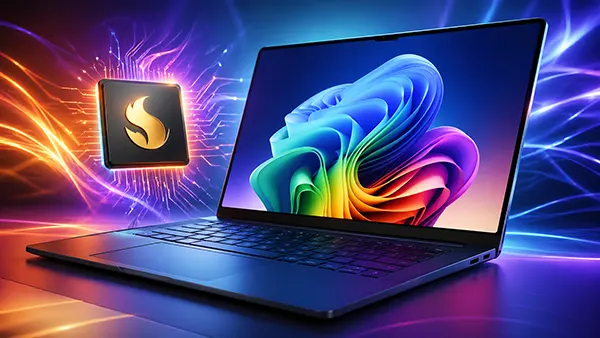
Qualcomm’s Snapdragon X2 Elite represents a significant step forward in ARM laptop processors. Early industry reports suggest improvements in CPU architecture, including custom high-performance cores designed to rival Apple’s M-series chips. Unlike previous Snapdragon generations, the X2 Elite is expected to focus not only on efficiency but also on sustained performance under heavy workloads.
One of the key advantages of ARM architecture remains power efficiency. Snapdragon X2 Elite is likely to deliver longer battery life compared to many x86-based laptops, especially in real-world scenarios such as web browsing, video conferencing, and document editing. This is particularly relevant for mobile professionals who prioritise battery longevity over raw power.
Another important factor is integrated AI processing. Qualcomm continues to invest in dedicated neural processing units (NPUs), which are becoming increasingly relevant in modern computing tasks. Features such as real-time transcription, background blur in video calls, and on-device AI assistants are expected to run more efficiently on ARM systems powered by Snapdragon X2 Elite.
Thermal Design and Real-World Usability
Thermal efficiency is often overlooked but plays a crucial role in everyday use. Snapdragon X2 Elite is designed to operate within lower thermal envelopes, allowing manufacturers to create thinner and quieter laptops without sacrificing performance. This contrasts with many high-performance x86 laptops that rely on active cooling systems.
Fanless designs are expected to become more common with this generation. This not only improves portability but also enhances user comfort, especially in environments such as libraries or offices where noise levels matter. It also reduces mechanical wear, potentially increasing device lifespan.
In practical terms, users may notice fewer performance drops during prolonged workloads. Consistent performance without thermal throttling is a key advantage of efficient ARM chips, making them more reliable for tasks such as video streaming, coding, and multitasking.
Windows on ARM in 2026: Software Compatibility and Ecosystem
Microsoft has significantly improved Windows on ARM over recent years. One of the biggest changes has been the refinement of its x86 and x64 emulation layers. By 2026, these systems are expected to deliver near-native performance for many applications, reducing the gap between ARM and traditional platforms.
Native application support is also growing. Major software developers are increasingly releasing ARM-optimised versions of their applications. Tools such as Microsoft Office, Adobe Creative Cloud components, and popular browsers already run natively, and this trend is likely to continue.
Another critical aspect is developer support. Microsoft has expanded its development tools to simplify ARM optimisation. With better documentation, testing environments, and performance profiling tools, developers are more inclined to build software specifically for ARM systems rather than relying on emulation.
Gaming and Professional Software Limitations
Despite progress, certain limitations remain. Gaming on Windows on ARM still faces challenges due to compatibility issues with anti-cheat systems and graphics drivers. While cloud gaming services offer a workaround, native gaming performance is not yet comparable to dedicated gaming laptops.
Professional software, particularly in engineering and 3D modelling, may also encounter compatibility gaps. Although emulation has improved, some specialised tools are not fully optimised for ARM, which can affect performance and reliability.
However, these limitations are gradually diminishing. As ARM adoption increases, software vendors have a stronger incentive to optimise their products. By 2026, the range of fully compatible applications is expected to expand significantly.
Market Impact: Will ARM Laptops Compete with x86?
The broader question is whether ARM laptops can genuinely compete with established x86 systems. With Snapdragon X2 Elite, the performance gap is narrowing, particularly in everyday computing tasks. For many users, especially those focused on productivity, ARM devices may already offer a compelling alternative.
Pricing strategies will also play a role. If manufacturers position ARM laptops competitively, they could attract a wider audience. Lower power consumption may reduce production costs related to cooling systems, potentially allowing for more affordable devices without compromising build quality.
Enterprise adoption is another key factor. Businesses are increasingly interested in devices that offer strong battery life, security features, and efficient remote management. ARM-based laptops, with their integrated connectivity and energy efficiency, align well with these requirements.
Future Outlook and Industry Adoption
The success of ARM laptops in 2026 will depend on collaboration between hardware manufacturers, software developers, and operating system providers. Snapdragon X2 Elite demonstrates that hardware is no longer the limiting factor; the focus is now on ecosystem maturity.
Competition from Apple’s ARM-based Macs has already influenced market expectations. Windows-based ARM laptops must match or exceed these standards in performance, battery life, and user experience to gain wider acceptance.
If current trends continue, 2026 could mark a transition point rather than a complete shift. ARM laptops are likely to become a mainstream option alongside x86 systems, giving users more choice depending on their specific needs and workflows.