Why Budget Smartphones in 2025 Can Outperform Three-Year-Old Flagships
The smartphone market has changed noticeably over the past few years. Devices that were once considered entry-level now handle everyday tasks with confidence, while older premium models increasingly show their age. In 2025, choosing between a new budget phone and a flagship from three years ago is no longer an obvious decision. The difference lies not in marketing labels, but in real-world performance, software support, and long-term usability.
Modern processors and memory efficiency
Budget smartphones released in 2025 often rely on mid-range chipsets built on more advanced manufacturing processes than those used in flagships from 2021–2022. Even when raw benchmark numbers appear similar, newer processors benefit from improved instruction handling, better thermal control, and more efficient cores. This results in smoother everyday operation, especially during multitasking.
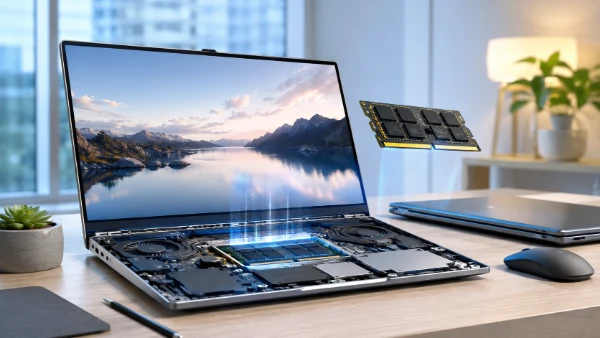
Memory management has also improved significantly. Affordable devices now commonly ship with faster LPDDR4X or LPDDR5 memory and UFS 2.2 or UFS 3.1 storage. Older flagships may still use fast components, but their memory controllers and software optimisation are tied to outdated system frameworks, which can lead to slower app loading over time.
Energy efficiency is another practical advantage. A modern mid-range processor consumes less power under the same workload, meaning longer screen-on time and less heat. For users who rely on their phone throughout the day, this difference is noticeable after only a few weeks of use.
Real-world performance versus benchmark figures
Benchmark scores often suggest that older flagships remain powerful, but daily usage tells a different story. New budget phones are tuned for current versions of Android and popular apps, which are optimised for newer chip architectures. As a result, animations feel more consistent and background processes are handled more predictably.
Three-year-old flagships can still handle demanding tasks, but they are more likely to throttle under sustained load. Gaming sessions, navigation combined with streaming, or prolonged video recording often reveal these limitations. Newer budget models are designed with such scenarios in mind, even if they target a lower price segment.
For most users, performance is defined by stability rather than peak power. In this respect, a well-optimised 2025 budget smartphone often feels faster and more reliable than an ageing premium device.
Software updates and long-term security
One of the most underestimated factors when comparing smartphones is software support. In 2025, many budget models come with a guaranteed update policy of three to four Android versions and regular security patches. This level of support was once exclusive to premium devices.
Older flagships, even from reputable brands, are often nearing the end of their official update cycle. While they may still receive occasional security fixes, major system updates are usually discontinued. This affects not only features but also app compatibility and overall system stability.
Security is not an abstract concern. Newer Android versions include improved permission controls, better protection against background tracking, and more refined encryption methods. A device stuck on an older system gradually becomes less resilient to modern threats.
Why update policies matter in daily use
Up-to-date software ensures that banking apps, work tools, and communication services continue to function without limitations. Developers increasingly target the latest Android APIs, which can leave older systems behind faster than many users expect.
In addition, system updates often improve battery optimisation and fix long-standing bugs. Budget phones released in 2025 benefit from these refinements from the start, while older flagships are locked into earlier design decisions.
From a practical standpoint, a device that remains supported for several years offers better value and fewer compromises, regardless of its original market position.

Cameras and realistic usage scenarios
Camera hardware has evolved rapidly, even in the lower price range. Budget smartphones in 2025 frequently use newer sensors with improved light sensitivity, combined with more capable image processing algorithms. This often results in more balanced photos than those produced by older flagship cameras.
While premium devices from three years ago may feature higher-resolution sensors or optical stabilisation, their image processing is based on outdated computational models. Modern software plays a crucial role in photography, especially in low-light and HDR situations.
Video recording shows a similar pattern. Newer budget phones handle stabilisation and exposure transitions more smoothly, even if they do not support the highest resolutions available on older flagships.
When buying an old flagship becomes a mistake
Purchasing a three-year-old flagship can seem attractive due to its original premium status, but hidden compromises often appear quickly. Battery degradation is one of the most common issues, and replacing it is not always straightforward or economical.
Spare parts availability and repair costs also play a role. Older premium models may require proprietary components, while newer budget phones are designed with cost-effective servicing in mind.
In the end, the mistake lies in focusing on past prestige instead of current usability. For most people in 2025, a modern budget smartphone offers a more balanced, secure, and predictable experience than an ageing flagship.