
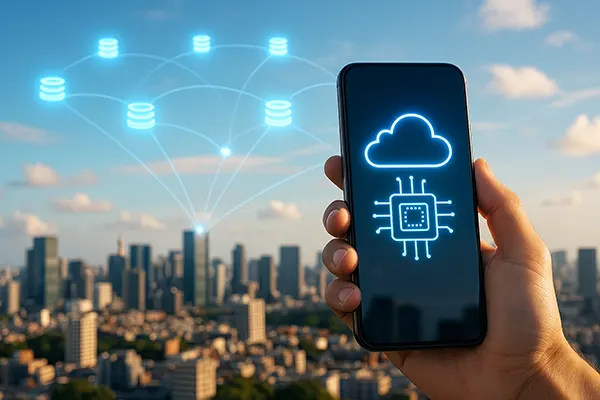
How 5G and Edge Computing Shape Modern Mobile App Design and Performance
The rapid expansion of 5G networks and the growing adoption of edge computing are reshaping the foundations of mobile app development. By 2025, these technologies have become critical for delivering responsive, resource-efficient and highly scalable mobile software. Their combined influence changes not only technical architecture but also user expectations, forcing developers to rethink how data is processed, how interfaces behave and how devices interact with connected environments.
Faster Networks and Reduced Latency as Core Drivers
The widespread availability of 5G connectivity brings extremely low latency, often falling below 10 milliseconds in urban regions. This shift makes real-time interactions far more reliable, enabling mobile apps to support features that previously required wired connections or powerful servers. Video conferencing, cloud gaming, real-time collaboration tools and instant media processing benefit directly from this improvement.
For developers, stable high-bandwidth conditions allow heavier workloads to move off the device without harming responsiveness. As a result, design strategies increasingly rely on remote execution for AI inference, image processing, or complex calculations when on-device resources are limited. Such workflows reduce battery consumption and keep user experiences smooth even on mid-range smartphones.
In addition, low-latency environments influence UI and UX choices. Interfaces can update more rapidly, synchronise with remote systems instantly and provide dynamic responses to user actions. This creates new standards for perceived speed, making delays far less acceptable than in earlier mobile generations.
How Network Improvements Affect Architectural Decisions
Developers are shifting towards modular architectures to fully exploit 5G capabilities. Microservices, event-based pipelines and distributed execution layers become more common as apps rely less on monolithic logic and more on cloud or edge-hosted functions. This approach improves scalability and eases updates across fragmented device ecosystems.
Another architectural consequence is the increased dependence on asynchronous communication. Real-time capabilities encourage the use of push updates, bidirectional channels and streaming APIs rather than traditional polling. These patterns reduce bandwidth waste and keep apps synchronised with backend systems at all times.
Security designs also evolve. With more data travelling across networks at higher speeds, encryption and real-time threat detection must be integrated more deeply into app logic. Developers should ensure that performance gains from 5G do not undermine security standards, especially for financial, medical or IoT-related applications.
The Impact of Edge Computing on Processing and Efficiency
Edge computing brings data processing closer to users by placing servers near cellular towers or localised data hubs. This approach dramatically reduces the physical distance data must travel, improving response times and decreasing network load. For mobile apps, it means quicker access to processed results and a significant drop in reliance on centralised cloud infrastructure.
By 2025, many mobile systems—such as smart city services, industrial monitoring, autonomous transport and AR-based navigation—routinely depend on edge nodes. These apps require instant contextual data, which would be impractical with traditional cloud-only processing. Edge computing supports such complexity without compromising performance or reliability.
Developers benefit from improved load distribution. Tasks that are too demanding for the device, yet too latency-sensitive for the cloud, now fit naturally into edge environments. This leads to more balanced resource allocation and increased sustainability in mobile ecosystems.
New Approaches to Data Handling and Storage
With edge centres managing a large share of real-time data, mobile apps adopt hybrid storage models. Frequently accessed data can be cached at the edge, reducing repetitive requests to distant servers. This enhances speed for location-based apps, media platforms and IoT dashboards.
The proximity of computing nodes enables more advanced personalisation. Apps can deliver context-aware features—such as local traffic updates or predictive maintenance insights—without exposing sensitive information to centralised servers. This helps reinforce privacy standards and strengthen user trust.
However, edge deployments require robust synchronisation mechanisms. Developers must ensure consistency between edge caches, core cloud databases and device-level storage. Such coordination prevents data drift, especially for apps supporting shared workspaces or large user groups.

Combined Influence on Design, Interaction and Future Trends
The integration of 5G and edge computing encourages more immersive, responsive and resource-efficient app experiences. Developers incorporate richer visual layers, live data overlays and AI-driven interactions without overwhelming device hardware. These enhancements are becoming commonplace rather than experimental.
Future app design increasingly centres on distributed intelligence. Instead of relying solely on the device or the cloud, logic is spread across on-device processors, edge servers and centralised systems. This approach ensures reliable performance even under heavy loads while maintaining high energy efficiency.
Looking forward, mobile ecosystems will depend on predictive models that determine where computation should occur at any given moment. As networks evolve and more devices join the connected environment, intelligent orchestration between the edge, the cloud and the device will become essential for maintaining performance and sustainability.
What Developers Should Prioritise in 2025 and Beyond
App creators should focus on flexible system designs that can adapt to varying network conditions. Even though 5G coverage continues to expand, maintaining graceful performance in mixed environments remains important. Adaptive bitrate streaming, fallback computation paths and offline-ready modules increase resilience.
Energy efficiency remains another major concern. By combining edge execution with optimised network usage, developers can reduce power demands and extend device lifespan during intensive workloads. This is particularly relevant for AR, VR and AI-powered apps that place significant strain on mobile chips.
Finally, security requires continuous attention. Distributed processing introduces more potential entry points, making it essential to implement encryption, authentication layers and constant monitoring. The future of mobile app performance is firmly tied to secure, intelligently distributed computation across all tiers of the network.